
Sleeping with the author
Collaborating on a passion project--is it worth the risk?

“The Back Sides of White Souls” is what the author calls a “personal and dangerous” exploration of his link to the Ku Klux Klan. A warning: it doesn’t make for easy reading.
Ron Grimes was a young scholar when he cut his teeth on civil rights work in Atlanta and New York before moving to Canada in the 1970s. He went on to become a dual citizen and raise a family, teaching ritual studies in Ontario and abroad, including at Yale University. He penned Backsides in 2017, fuelled by a sense of urgency about his native country.
I know because I watched him write it.
Ron and I are married, and with our offspring in Toronto and Tennessee, the senseless death of friendly Canada-U.S. relations is strangling our cross-border ties. An Eagle Scout who had trained in threat-assessment in the Gila Wilderness, Ron broke down and wept at the 2016 U.S. election.
I could see he was exhausted. Americans were denying their complicity in the country’s downturn. His grief-filled rage angered family members when we all gathered in New Mexico, where the clan is rooted. Finally, he took to creative writing and in his Zen (mindful) Cowboy (kick-ass) way, broke the code of silence.
Confederates on both sides of my family made their way from Georgia or the Carolinas, through Tennessee, then to Texas and New Mexico. Confederates on both sides of the bloodline—I stagger under the ancestral weight of their presence.
At first, I was filled with admiration at the jaw-dropping drafts of Backsides landing on my desk.
Writing full-throated family history takes grit and no-holds-barred ethical storytelling. Grim discoveries—like the fact that your upstanding Christian forebears were “esteemed” members of the Klan—exact a price. Reconstruct your faith, reform old myths and fictions. Expect close relationships to crumble.
Will the skeletons kick up a fuss? You bet.
I see this a lot, guiding writers who are mining generations of material—much of it lost, buried, forgotten, whitewashed, or distorted—in a reckoning with history. They do so in hopes that their work will enter the bloodstream of the culture, fueling research, stirring empathy, informing policy, and so on. At the very least, a writer hopes their work will get people talking.
I am told that I excel at this midwifery. Maybe so. But even before Ron sent Backsides out on submission, I felt spooked.
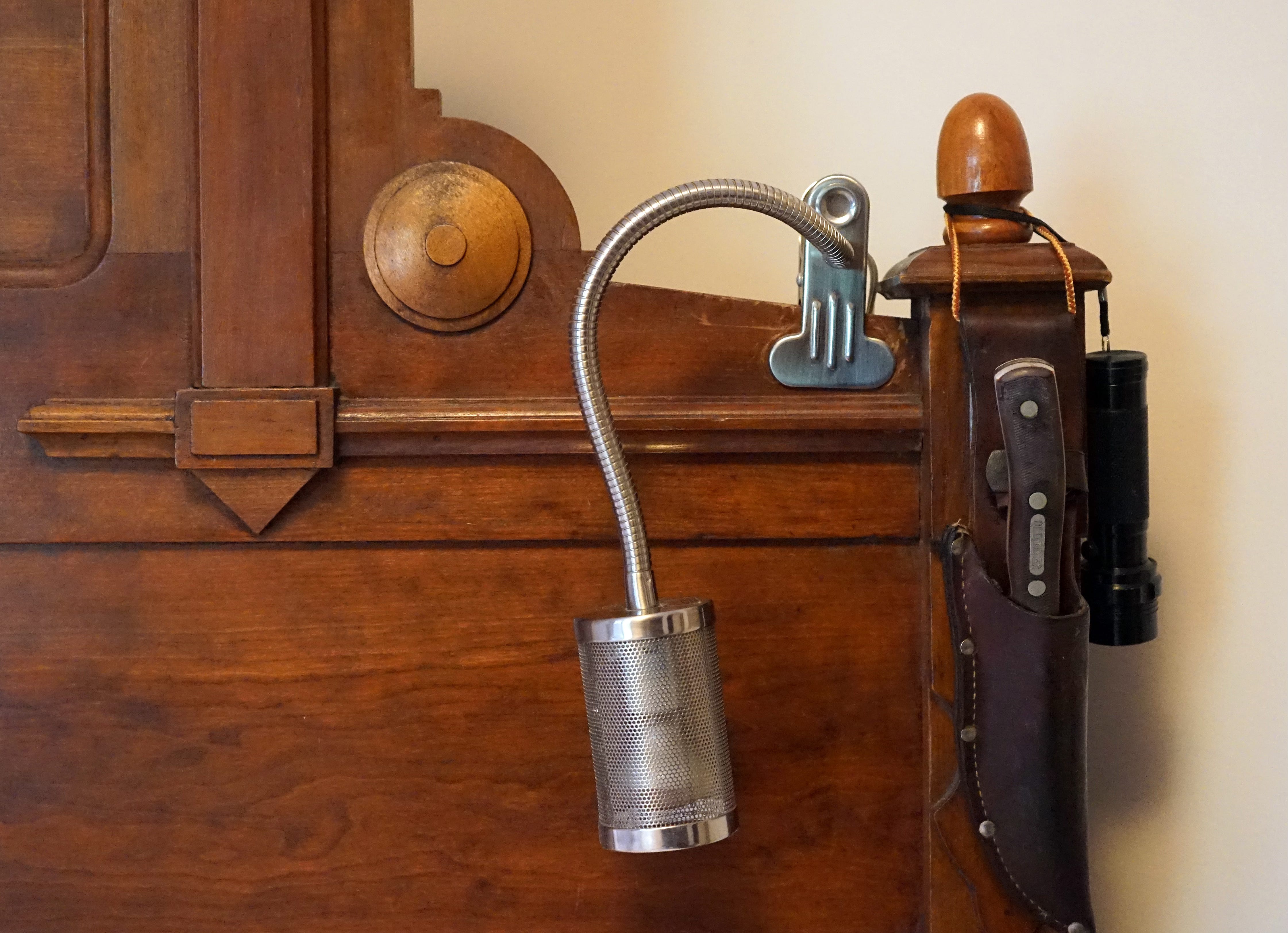
It didn’t help that I was fed up with his Old Timer hunting knife dangling from the bedpost—a relic of his hunting days, kept close, he insisted, “to ward off intruders.” (We have never had a break-in, but, whatever.)
The knife was useless against the skeletons kicking down the door.
The writer-editor relationship is deeply intimate. “People have no idea,” I groaned, “how much sleep we lose, just working our way through a piece. We should write about that.” By which I meant, those most invested in a project often have conflicting viewpoints.
Make that “vastly different temperaments,” and you have the two of us.
I coaxed Ron into co-writing a behind-the-scenes dialogue called “Sleeping with the Author” (tnq.ca) to show what happens when American tell-all instincts bed typical Canadian niceness. For better or worse, I represent the latter. I was fine with readers witnessing our lively (read: fraught) tussling over text, because secretly, I thought they would take my side.
So, was the dialogue was instructive? Yes.
Sleeping exposes me.
Full disclosure: the knife-like truth-telling that keeps me up nights isn’t new. Marrying & Burying, Ron’s 1995 memoir, made a lot of people flinch. (Spoiler alert: the skeleton cover art represents our young family.) And now, what he’d exposed in Backsides would alienate the prayers-and-pistols relatives. That irked me, the family mediator. Why go there? What was he hoping to accomplish?
Ron and I have long edited each other’s work, only now there was this ugly thing between us—his ignoring my asking him to stop.
His instincts were explosive; mine were all about restraint.
He leaned in where I leaned back.
Think national stereotypes on steroids.
Then along came Emily Donaldson at Canadian Notes and Queries (CNQ), who loved the Backsides essay, and published it in January 2018 as a Web Exclusive. For Ron—a victory. For me, another spike in dread. The more he shared the hyperlink, the more I felt panic rising in my throat.
We were now a click away from the West Texas family MAGAs, trolls, and anyone who’s keen to own the libs, or for that matter, Canada. (We make easy prey—90% of us live within 160 kms/100 miles of the U.S. border.)
“Enough,” I finally said. “I’ve had it with a knife by the bed.”
As Ron says in Backsides, he “locked the knife into an attic treasure box.” He does not cite my ire as inspiration.
*
It is now August 2025. Nazi-loving white supremacists are ramping up in Texas and exercising openly in my old hometown of Hamilton, Ontario, under the guise of so-called active clubs. Life is changing. The world is changing.
And with that, I am making changes.
I’m not satisfied with fight or flight reactions to trouble.
But trouble is afoot, my friends. Democracy is degrading in the superpower to the south and all around the globe. And though I am not (yet) in the grips of what Stephen Marche calls Canada’s “astute, profound and abiding rage,” I am prioritizing the following.
Safeguarding public spaces with diverse storytellers, accurate reporting, transparency, and public accountability. My role is not just to champion critical thinking wed to powerful storytelling, but to see that it goes public: in libraries, independent bookstores, literary festivals, museums, cultural centers, and responsible media. Places where the full human story is respected.
Supporting those who voice hard truths. As theologian-activist Cornel West said in a recent The Middle podcast, “There has never been a golden age . . . truth-tellers and truth-actors have always been targeted . . . have always been made to drink the hemlock.”
*
Arts-and-culture work knows no borders. But to thrive, we must be free to come together openly, to challenge dogma in creative ways that defy suppression. As a dogged utopian-style literary type (is there any other kind?) with 30-something years of collaborating under my belt, I know the best way I can counter trouble is to find good people, and work together in common cause.
This is where I stand—and it’s not spoiling for a fight.
I am looking to imagine.
Liz Harmer’s latest Substack post is an example. She lists “humor, art, and curiosity” as her top three values. The award-winning Canadian writer now living in California is also a single mom enrolled in, of all things, library school. When asked to reflect on her values, she wrote:
“By humor,” I said, “I also mean friendship.” “By art,” I said, “I also mean awe and beauty and meaning-making.” “By all three,” I said, “I also mean humility and kindness.”
Talk about radical optimism.
I see the same spirit in beloved cross-border co-creators too numerous to mention. (I’ll shine a light on them another time.)
As for me, I’d add to those values radical hospitality. Working with an unholy mix of storytellers, truth-mongers, creatures, dust-licking skeletons, and so on is an honor. Practically, that means I need to pick up the pace on the manuscripts teetering on my desk—works that give voice to people in diaspora and in denial, in disarray and anguish; to those seeking wholeness in Afghanistan, India, Latvia, Montreal, Ohio, Poland, and Toronto.
(Full disclosure: I’m behind schedule. It’s been a hectic summer.)
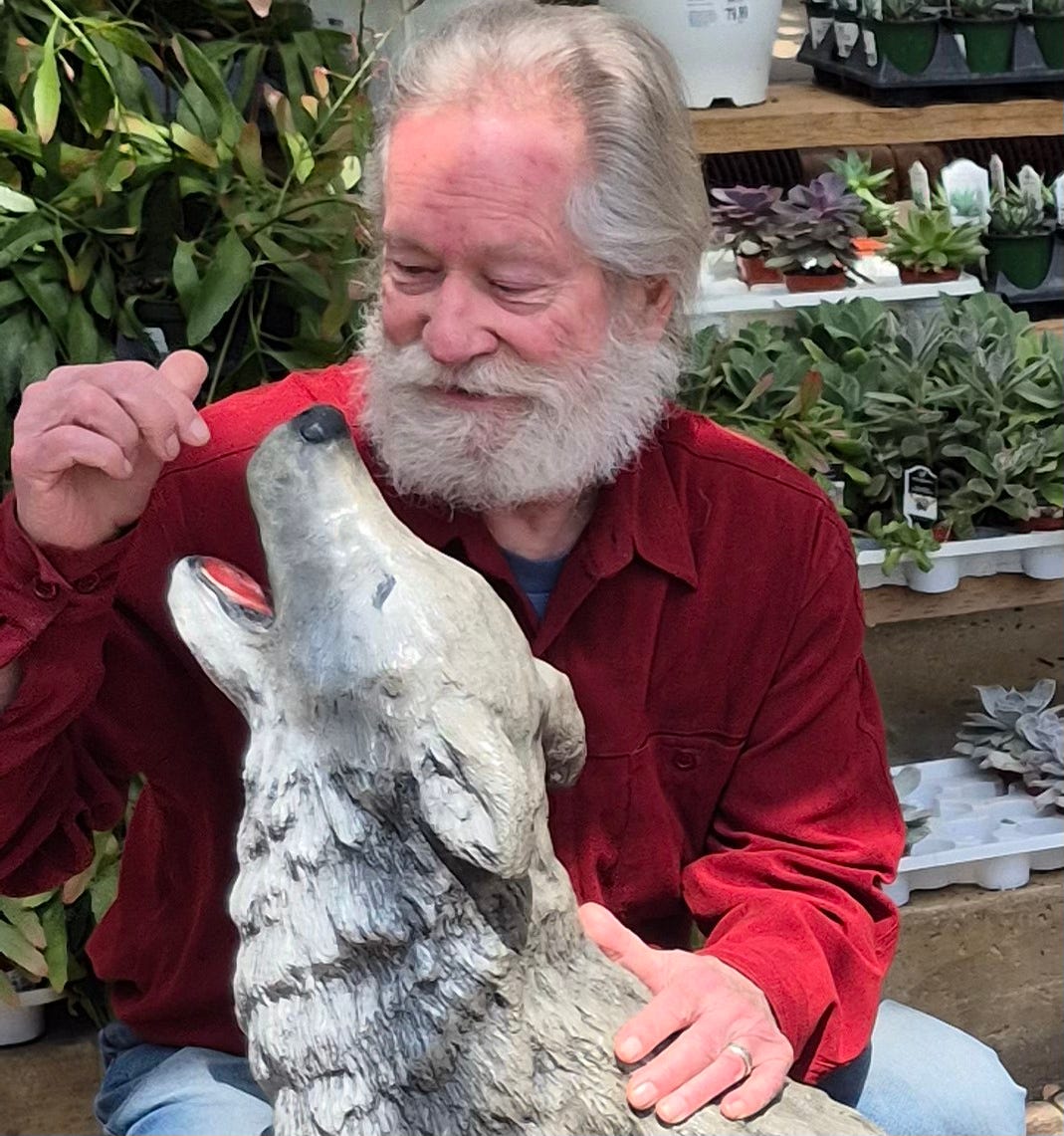
Radical hospitality, aka collaborating, is risky because it fosters transformation. Creative folks make great bedfellows; where there’s chemistry, there’s tension, possibility.
Creative drive.
Passionate momentum.
Eros.
On that note, I am happy to report that Ron and I are on the same page now (thanks for asking!). Another upturn: his West Texas MAGA sibling is finally talking to him. These days, that is monumental.
As for the Old Timer, it was sprung from the attic for the kitchen, where it’s drawn on feast days as a nod to its enduring power as a working knife.
It just isn’t needed in the bedroom.
So, my friend, I would love to hear from you. How you are repurposing fear and dread?
I’d like to think you’re doing your best work now, imagining a good way forward.
Wherever you lay your head, may you rise with courage and conviction and, on a good day, joy. If ever there was a time to throw open the covers, that time is now.
*
For more on healing and racial reckoning, I hope you’ll add these to your summer reading—one book from Canada and an essay from the States: Chyana Marie Sage’s debut memoir, Soft as Bones (Anansi, 2025), and James Whorton Jr.’s “An Upset Place,” chosen by guest editor Wesley Morris from the final (!) issue of The Gettysburg Review for Best American Essays 2024.